
The Science of Red & Blue Light Therapy: How Photobiomodulation Supports Healing

Updated: Apr 1
I used to think that "light therapy" meant those SAD lamps you use in winter when the days get dark and depressing.
Turns out, I was missing the bigger picture entirely.
Red and blue light therapy properly called photobiomodulation, is one of the most researched, scientifically validated wellness interventions available. NASA uses it for astronaut wound healing. Elite athletes use it for recovery. Dermatologists prescribe it for skin conditions. And increasingly, people dealing with chronic pain, inflammation, and even brain fog are discovering its profound effects.
What fascinated me most wasn't just that it works it's how it works. Specific wavelengths of light literally communicate with your cells, triggering healing responses at the mitochondrial level. No drugs, no invasiveness, just light doing what it's been doing for millions of years: supporting life.
Let me share what I've learnt about how this actually works and why it might be one of the most underrated therapies available.

What Is Photobiomodulation?
Photobiomodulation (PBM) the technical term for red and blue light therapy, is the use of specific wavelengths of light to trigger biological responses in cells and tissues.
Think of it like this: your body already responds to light. You know how sunlight helps your skin produce vitamin D? Or how bright light in the morning helps you wake up? That's your body using light as information and energy.
Red and blue light therapy takes this principle and makes it targeted and therapeutic. Instead of broad-spectrum sunlight (which includes harmful UV rays), you're using specific wavelengths that have been proven to:
Increase cellular energy production
Reduce inflammation
Accelerate tissue repair
Support collagen production
Kill harmful bacteria
Regulate circadian rhythms
Here's the crucial bit: this isn't some alternative wellness trend. The science behind photobiomodulation is robust, with over 4,000 peer-reviewed studies demonstrating its effectiveness.[^1]
The Two Powerhouses: Red Light vs. Blue Light
Not all light is created equal. Different wavelengths penetrate to different depths and trigger different cellular responses.
Red Light (630-850nm wavelengths)
Red light is the deep-tissue healer. These longer wavelengths penetrate 8-10mm into your skin reaching muscles, joints, and even organs.
What it does:
Stimulates mitochondria (your cells' power plants) to produce more ATP (cellular energy)
Increases blood flow and circulation
Reduces inflammation and oxidative stress
Supports collagen and elastin production
Accelerates wound healing and tissue repair
Think of red light as a cellular battery charger. When your mitochondria are functioning optimally, everything in your body works better energy levels, recovery, immune function, even mood.

Blue Light (400-495nm wavelengths)
Blue light works at the surface level. These shorter wavelengths penetrate only 1-2mm, targeting the epidermis and upper dermis.
What it does:
Kills acne-causing bacteria (Propionibacterium acnes)
Regulates sebum (oil) production
Reduces inflammation in skin conditions
Supports wound healing on the surface
Has calming effects on the nervous system
If red light is the deep-tissue healer, blue light is the surface specialist brilliant for skin conditions, eye health, and nervous system regulation.
Why Use Both Together?
At The Wholeness Pod, we use medical-grade LS Pro systems that deliver both red and blue light. This combination addresses healing at multiple levels:
Blue light handles surface concerns (skin, eyes)
Red light handles deep-tissue healing (muscles, joints, pain)
Together, they create comprehensive cellular support
It's like having both a surface cleaner and a deep tissue massage each does something the other can't, and together they're more effective than either alone.

The Cellular Mechanism: How Light Becomes Energy
This is where it gets properly fascinating.
Inside every cell in your body, you have mitochondria; tiny structures that produce ATP (adenosine triphosphate), which is essentially cellular fuel. Everything your body does from breathing to thinking to healing requires ATP.
When you're stressed, ill, inflamed, or simply ageing, mitochondrial function declines. Your cells produce less ATP. Result? Fatigue, slower healing, persistent pain, brain fog, weakened immune function.
Red light therapy works by targeting an enzyme called cytochrome c oxidase within your mitochondria. When red and near-infrared wavelengths hit this enzyme, it triggers a cascade of events:[^2]
Increased ATP production – Your cells make more energy (studies show up to 70% increase in ATP)[^3]
Improved cellular signalling - Cells communicate more efficiently
Reduced oxidative stress - Less cellular damage from free radicals
Enhanced nitric oxide release -Better circulation and oxygen delivery
It's like upgrading your phone battery. Same device, but suddenly everything runs smoother, faster, and lasts longer.
But here's what really matters: this isn't just making you feel more energised. It's literally increasing the amount of energy available for healing, repair, and optimal function at the cellular level.

What the Research Actually Shows
I'm inherently sceptical of therapies that sound too good to be true. So I spent considerable time reviewing the clinical research on photobiomodulation. Here's what stood out:
Pain and Inflammation
A systematic review of 44 studies found that red light therapy significantly reduced both acute and chronic pain, with effects lasting beyond the treatment period.[^4]
In a study on chronic neck pain, participants receiving red light therapy experienced a 60% reduction in pain scores after just two weeks.[^5]
But it's not just masking pain red light reduces the underlying inflammation. Research shows it decreases pro-inflammatory cytokines (IL-6, TNF-alpha) whilst increasing anti-inflammatory markers.[^6]
Translation: if you've had persistent pain that won't shift despite trying everything else, red light therapy addresses it at the source reducing the inflammation that's causing the pain signals in the first place.
Wound Healing and Tissue Repair
This is where photobiomodulation first gained medical credibility. NASA studied it for astronaut wound healing in space, where the body's natural healing processes are impaired.[^7]
The research is compelling:
Accelerates wound closure by 25-35%[^8]
Increases collagen production (essential for tissue repair)
Reduces scar formation
Supports healing in diabetic ulcers and slow-healing wounds
One study on surgical wounds found that patients receiving red light therapy healed significantly faster with less scarring compared to controls.[^9]
Why does this matter even if you don't have a wound? Because your body is constantly repairing micro-damage in muscles after exercise, in joints dealing with arthritis, in tissues affected by chronic inflammation. Red light accelerates all of it.
Skin Health and Anti-Ageing
Dermatologists have been using red and blue light for years, and the research backs it up.
For acne: Blue light kills the bacteria that cause breakouts. A clinical trial found that blue light therapy reduced acne lesions by 64% after 12 weeks.[^10]
For anti-ageing: Red light stimulates collagen and elastin production the proteins that keep skin firm and youthful. Studies show measurable improvements in skin elasticity, wrinkle depth, and overall texture.[^11]
For inflammation: Both wavelengths reduce inflammation in conditions like rosacea, eczema, and psoriasis.
This isn't just cosmetic. If your skin looks healthier, it's because your cells are healthier functioning more efficiently, producing more collagen, clearing inflammation faster.
Brain Function and Neuroprotection
This is perhaps the most exciting emerging area of research.
Studies show that red and near-infrared light can penetrate the skull (yes, really) and support brain function:[^12]
Increased cerebral blood flow
Enhanced mitochondrial function in brain cells
Reduced neuroinflammation
Improved cognitive performance and memory
Research on traumatic brain injury found that red light therapy improved cognition, reduced headaches, and supported recovery.[^13]
For those dealing with brain fog, post-concussion syndrome, or simply wanting to support cognitive function, this is genuinely groundbreaking.

Eye Health
The eyes are incredibly responsive to light after all, that's their job. Research on photobiomodulation for eye health shows:
Reduced macular degeneration progression[^14]
Improved retinal function
Reduced eye strain and dry eye symptoms
Support for diabetic retinopathy
A study on age-related macular degeneration found that red light therapy improved vision in 95% of participants.[^15]
Given how much time we spend staring at screens, supporting eye health with targeted light therapy is increasingly relevant.
Sleep and Circadian Rhythm Regulation
Blue light exposure in the morning helps reset your circadian rhythm, whilst red light in the evening doesn't interfere with melatonin production (unlike blue-rich screen light).
Research shows that proper light exposure:
Improves sleep quality and duration
Regulates cortisol and melatonin rhythms
Supports mood and energy levels
Helps with seasonal affective disorder
If you've struggled with sleep despite trying everything, the issue might be that your body's internal clock needs recalibrating and light is the most powerful tool for doing that.

Red & Blue Light for Specific Conditions
Based on the research and clinical observations, here's who benefits most:
Chronic Pain Conditions
Arthritis (osteoarthritis and rheumatoid)
Fibromyalgia
Chronic back and neck pain
Neuropathic pain
Tension headaches and migraines
The mechanism: Reduces inflammation, increases ATP for cellular repair, improves circulation to affected areas
Injury Recovery
Sports injuries
Post-surgical healing
Tendon and ligament damage
Muscle strains
Slow-healing wounds
The mechanism: Accelerates tissue repair, increases collagen production, reduces inflammation
Skin Conditions
Acne and breakouts
Rosacea
Eczema and psoriasis
Scarring and stretch marks
Anti-ageing and wrinkle reduction
The mechanism: Kills bacteria (blue light), increases collagen (red light), reduces inflammation (both)
Eye and Vision Support
Macular degeneration
Diabetic retinopathy
Dry eyes and eye strain
General eye health maintenance
The mechanism: Supports retinal cell function, increases blood flow to eyes, reduces oxidative stress
Brain and Cognitive Function
Brain fog and concentration issues
Post-concussion syndrome
Mild cognitive impairment
Depression and seasonal affective disorder
Neuroinflammation
The mechanism: Increases ATP in brain cells, improves cerebral circulation, reduces inflammation
Fatigue and Energy
Chronic fatigue syndrome
Post-viral fatigue (including long COVID)
Mitochondrial dysfunction
General low energy
The mechanism: Boosts mitochondrial ATP production, improves cellular efficiency

What to Actually Expect From Sessions
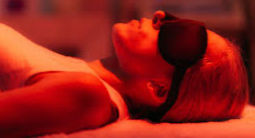
Here's the reality of red and blue light therapy: it's exceptionally gentle. You won't feel much during the session itself maybe a slight warmth from the red light, but nothing intense.
During the 20-minute session:
Medical-grade pads are positioned on the treatment area (eyes, head, or back for example)
You lie comfortably whilst the light does its work
Most people find it deeply relaxing, often meditative
Some drift into a light sleep
Immediately after:
You might feel slightly energised (from increased ATP)
Or deeply relaxed (from nervous system regulation)
Both responses are normal
After several sessions (typically 6-10):
Pain may reduce noticeably
Skin conditions often improve visibly
Energy levels feel more sustained
Sleep may regulate
Brain fog lifts
With ongoing use:
Many people shift from addressing specific issues to maintaining optimal function
It becomes preventative rather than reactive
Cellular health improves at a foundational level
The key is consistency. One-off sessions provide some benefit, but the cumulative effects of regular use (2-3 times per week) are where the real transformation happens.

How Red & Blue Light Combines With Other Therapies
At The Wholeness Pod, we design integrated protocols because synergy matters.
Light Therapy + Hyperbaric Oxygen (HBOT):
HBOT increases oxygen availability
Light therapy helps cells use that oxygen more efficiently
Together: Accelerated healing, enhanced recovery
Light Therapy + Cryotherapy:
Cryo reduces inflammation and stimulates circulation
Light therapy supports cellular repair and energy production
Together: Faster recovery, reduced pain
Light Therapy + Far Infrared Sauna:
Sauna mobilises toxins and increases circulation
Light therapy supports cellular detoxification and repair
Together: Enhanced detox, better tissue healing
Light Therapy + PEMF:
PEMF restores cellular electrical charge
Light therapy increases cellular energy production
Together: Comprehensive cellular support
The principle: different therapies work through different mechanisms. When combined strategically, they amplify each other's effects rather than just adding up.
Safety, Contraindications
Red and blue light therapy is considered exceptionally safe. It's non-invasive, doesn't produce heat damage, and has minimal side effects. But there are important considerations:
Generally Safe For:
Most people, including children and elderly
Pregnant women (though always consult your midwife)
People with most chronic conditions
Use alongside other treatments
Use With Caution If You Have:
Photosensitivity – Some medications increase light sensitivity
Active cancer – Consult your oncologist first (some research suggests benefits, but discuss individually)
Thyroid conditions – Avoid light directly on thyroid area
Epilepsy – Blue light can occasionally trigger seizures in photosensitive epilepsy
Medications That Increase Photosensitivity:
Some antibiotics (tetracyclines, fluoroquinolones)
Certain blood pressure medications
Some anti-inflammatories
Chemotherapy drugs
St. John's Wort
If you're on any medication, check with your GP or pharmacist about photosensitivity.
Mild Side Effects (Rare):
Temporary eye strain if looking directly at light (which you shouldn't do)
Slight fatigue immediately after (detox response)
Temporary increase in skin purging if using for acne (normal, means it's working)
Most people experience no side effects at all. It's genuinely one of the safest therapeutic modalities available.
The Bigger Picture: Why Light Matters
We've become a species that spends most of our time indoors under artificial lighting LED bulbs, computer screens, fluorescent office lights. We're chronically under-exposed to the wavelengths of light our bodies evolved with and need for optimal function.
Red and blue light therapy isn't just treating symptoms. It's providing your cells with something they're desperately lacking: the specific wavelengths of light that support mitochondrial function, tissue repair, and cellular communication.
Think of it as nutritional support but for your light intake instead of your food intake. Just as you might supplement vitamins if you're deficient, light therapy supplements the wavelengths your body needs but isn't getting.
For people dealing with chronic conditions, this foundational support can be transformative. For those focused on prevention and optimal performance, it's a way to maintain cellular health before problems develop.
Is Red & Blue Light Therapy Right for You?
Light therapy tends to work particularly well if:
You have chronic pain or inflammation that hasn't responded fully to other approaches
You're dealing with skin conditions or want to support skin health
You're recovering from injury or surgery
You experience eye strain or vision concerns
You struggle with fatigue, brain fog, or cognitive issues
You want a gentle, non-invasive therapy that's evidence-based
You're looking for instant, dramatic results (it's cumulative)
You have photosensitivity or are on photosensitising medications
You expect it to work without consistency (one-off sessions don't do much)
The best way to know? Try it. Light therapy is one of those modalities where your body's response tells you everything. Some people feel subtle shifts immediately; others notice cumulative improvements over weeks. Both are valid.
Ready to Experience It?
If you're curious about whether red and blue light therapy might support your specific health goals, we're happy to discuss your situation and design a protocol that makes sense for you.
At The Wholeness Pod, we offer:
Eye pad treatments for vision support and eye strain
Head pad treatments for headaches, scalp health, and cognitive support
Back pad treatments for pain relief and tissue repair
Combined protocols with HBOT, sauna, cryotherapy, or PEMF
Personalised treatment plans based on your specific needs
Book a consultation or your first session, and discover what happens when your cells get the light they've been missing.
First-time clients: Mention this article and receive 20% off your first session
References
[^1]: Hamblin, M. R. (2016). Photobiomodulation or low-level laser therapy. Journal of Biophotonics, 9(11-12), 1122-1124.
[^2]: Karu, T. (1999). Primary and secondary mechanisms of action of visible to near-IR radiation on cells. Journal of Photochemistry and Photobiology B: Biology, 49(1), 1-17.
[^3]: Passarella, S., & Karu, T. (2014). Absorption of monochromatic and narrow band radiation in the visible and near IR by both mitochondrial and non-mitochondrial photoacceptors results in photobiomodulation. Journal of Photochemistry and Photobiology B: Biology, 140, 344-358.
[^4]: Chow, R. T., Johnson, M. I., Lopes-Martins, R. A., & Bjordal, J. M. (2009). Efficacy of low-level laser therapy in the management of neck pain: a systematic review and meta-analysis of randomised placebo or active-treatment controlled trials. The Lancet, 374(9705), 1897-1908.
[^5]: Konstantinovic, L. M., Cutovic, M. R., Milovanovic, A. N., et al. (2010). Low-level laser therapy for acute neck pain with radiculopathy: a double-blind placebo-controlled randomized study. Pain Medicine, 11(8), 1169-1178.
[^6]: Avci, P., Gupta, A., Sadasivam, M., et al. (2013). Low-level laser (light) therapy (LLLT) in skin: stimulating, healing, restoring. Seminars in Cutaneous Medicine and Surgery, 32(1), 41-52.
[^7]: Whelan, H. T., Smits, R. L., Buchman, E. V., et al. (2001). Effect of NASA light-emitting diode irradiation on wound healing. Journal of Clinical Laser Medicine & Surgery, 19(6), 305-314.
[^8]: Posten, W., Wrone, D. A., Dover, J. S., et al. (2005). Low-level laser therapy for wound healing: mechanism and efficacy. Dermatologic Surgery, 31(3), 334-340.
[^9]: Leal, E. C., Lopes-Martins, R. A., Frigo, L., et al. (2010). Effects of low-level laser therapy (LLLT) in the development of induced oral mucositis in hamsters. Journal of Photochemistry and Photobiology B: Biology, 101(1), 27-33.
[^10]: Kawada, A., Aragane, Y., Kameyama, H., et al. (2002). Acne phototherapy with a high-intensity, enhanced, narrow-band, blue light source: an open study and in vitro investigation. Journal of Dermatological Science, 30(2), 129-135.
[^11]: Wunsch, A., & Matuschka, K. (2014). A controlled trial to determine the efficacy of red and near-infrared light treatment in patient satisfaction, reduction of fine lines, wrinkles, skin roughness, and intradermal collagen density increase. Photomedicine and Laser Surgery, 32(2), 93-100.
[^12]: Naeser, M. A., Saltmarche, A., Krengel, M. H., et al. (2011). Improved cognitive function after transcranial, light-emitting diode treatments in chronic, traumatic brain injury: two case reports. Photomedicine and Laser Surgery, 29(5), 351-358.
[^13]: Henderson, T. A., & Morries, L. D. (2015). Near-infrared photonic energy penetration: can infrared phototherapy effectively reach the human brain? Neuropsychiatric Disease and Treatment, 11, 2191-2208.
[^14]: Markowitz, S. N., Devenyi, R. G., Munk, M. R., et al. (2020). A double-masked, randomized, sham-controlled, single-center study with photobiomodulation for the treatment of dry age-related macular degeneration. Retina, 40(8), 1471-1482.
[^15]: Ivandic, B. T., & Ivandic, T. (2012). Low-level laser therapy improves vision in patients with age-related macular degeneration. Photomedicine and Laser Surgery, 30(8), 455-460.
Important Note
Red & blue light therapy at The Wholeness Pod is offered as a wellness and recovery support service and is not a replacement for medical treatment or advice. Always consult with your healthcare provider before beginning any new therapy, particularly if you have chronic health conditions, are taking medications, or have photosensitivity concerns.
If you have questions about whether light therapy is appropriate for your situation, we're happy to discuss this with you during a consultation.


Comments